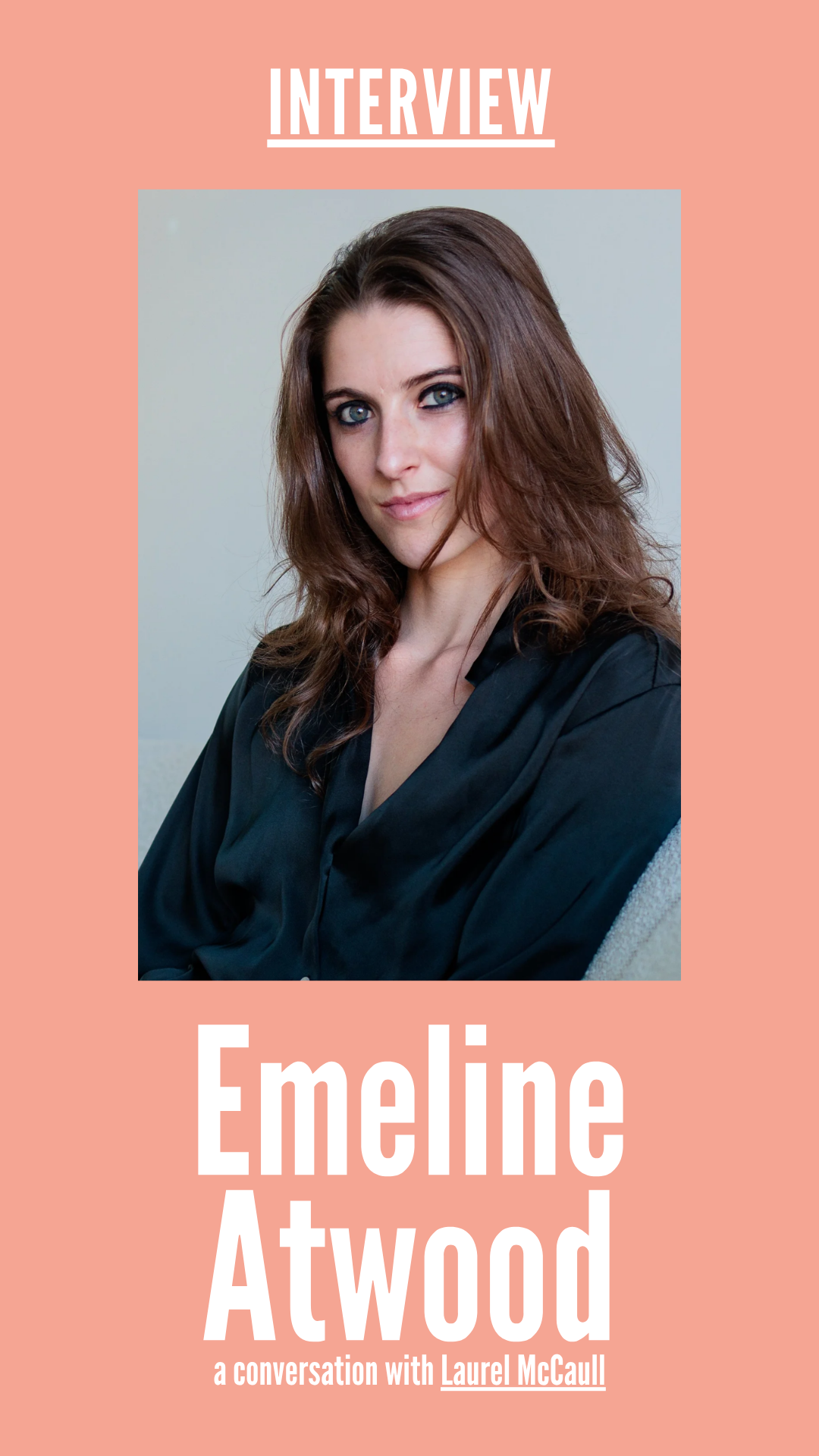
INTERVIEW: Emeline Atwood (A Real Animal)
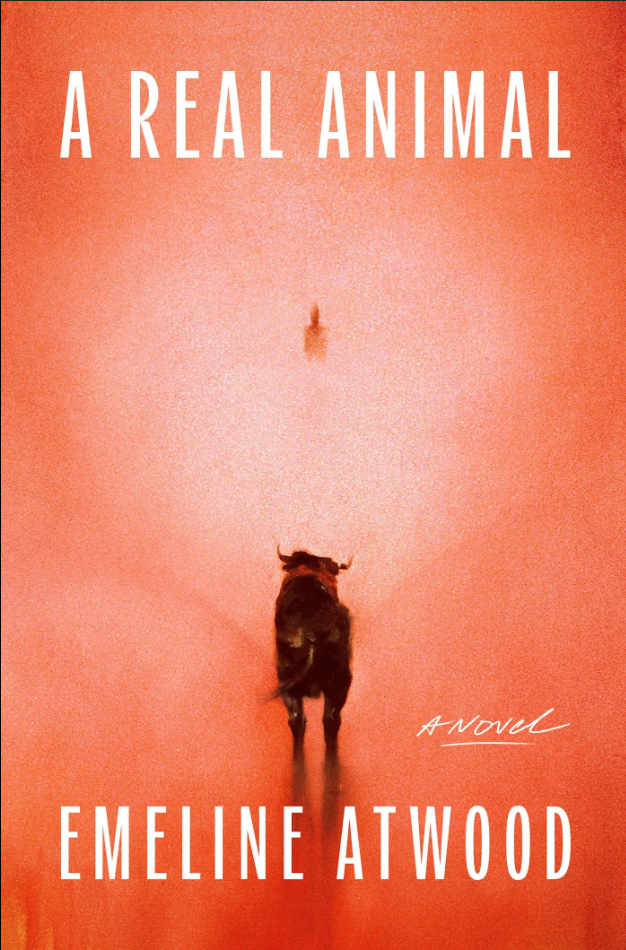
A Real Animal
Catapult Books
Emeline Atwood
A conversation with
Laurel McCaull
In the opening scene of A Real Animal (Catapult, 2026), Lucy wakes to find herself in the body of a leopard. But unlike Kafka’s Gregor Samsa, our protagonist feels at home in this new animal form. Even empowered by it. Though she returns to her human body soon after, and there she remains for the rest of the novel, this introduction serves as a tuning fork, preparing the reader for the emotional journey to come.
Like the scuba dives that Lucy takes while on vacation, author Emeline Atwood plunges into the depths of Lucy’s consciousness, descending through layers of trauma to find the treasure underneath. We follow Lucy as she navigates the highs and lows of her twenties, as she tries to find her edges amid the dizzying freedom of youth. It is a story about relationships, human and non, and the double-edged sword of intimacy. And, as Atwood assured me, it is a story about sisters.
After graduating Harvard, Emeline went on to receive her M.F.A. from the Michener Center for Writers, where she first conceived this book. We connected over Zoom to talk about her tremendous debut, as well as what it means to find closure after trauma, the distinction between empathy and anthropomorphism, and Atwood’s own process of accepting the choices she made in her twenties.
This interview has been edited for length and clarity.
Laurel McCaull: The book is divided into two parts, each of which centers around a different romantic relationship. In Part I, Lucy breaks up with her college boyfriend, Cole, and gets together with Ellis, a self-destructive “bad-boy.” Part II jumps ahead in time, and now Lucy is with Liam—a sweet, wholesome, woodworker. Why did you choose to structure the book this way?
Emeline Atwood: The book actually started as just a collection of scenes. I was originally thinking this would be a linked short-story collection. It’s Lucy’s voice, it’s chronological, so there’s consistency there, but in general, the structure is pretty episodic. Every chapter gravitates around one central scene. At first, I didn't have Part I and Part II because I wanted the structure to encapsulate the idea that there isn't one singular trauma, let's say, or one singular thing that happens to Lucy that is going to explain everything else. I wanted there to be an equal distribution of weight across these moments in her life.
But then Part I and Part II emerged because, when I took a step back, I saw a very clear arc. For example, Lucy arrives at a certain moment with Ellis, where she turns a corner in her twenties. I remember feeling that moment myself when I realized I wanted to settle down and reground and regroup. With Liam, Lucy is trying to find a home again as opposed to being an explorer. There are also some parallels between Part I and Part II that I ended up playing into more intentionally. So the structure emerged organically.
LM: I noticed there were a lot of doubles throughout the book, scenes that are mirrored or repeated in a different form. For example, Ellis beats someone up after getting beaten up himself, Lucy hides under the bed at the hotel after hiding under the bed of a truck, Lucy takes two very memorable long swims, and she experiences two major instances of sexual assault. What do you think is the significance of those parallels?
EA: I started noticing them a lot more in the process of revision. One way trauma is explored in the book is through the drive to recreate and reempower. Lucy is very resentful of the fact that there have been these things in her past that have really alienated her from her body or made her body a painful place to inhabit, and part of her journey can be looked at through the lens of her desperately trying to get back into her body. That also explains why there are a lot of moments that are very visceral and intense. I didn't want the language to be graphic, per se, and I think that’s because Lucy is trying to reconnect with her body and wants to reclaim those harmful experiences in a new way.
But the parallelisms are also vestiges from the original structure as short stories. One of my teachers once said that a lot of short story collections use this method of repetition and evolution, where motifs are repeating, repeating, repeating, and then eventually they evolve into something else. And that’s how the ending came to me—I returned to the beginning, and I asked, “How can this evolve outside of Lucy’s own mind? How does this big cat, this wildness, evolve after repeated transformations throughout the book? What is the next move of transcendence?”
LM: That’s such an interesting take on trauma, too, because you hear how trauma victims will recreate the same circumstances so their brain can “do it right” this time or figure out what went wrong. You often just continue to harm yourself by doing that, but I like the idea that there can be evolution within the return. Then it’s less of a cycle and more of a spiral.
EA: And that happens generationally, too. In one of the scenes toward the end with Lucy and her mom, Lucy says, “After all, I was just like her. I was also someone who broke vows.” But they're not the same person, and Lucy’s trying to develop some awareness that you’re not your past, that you don't need to have closure on everything in order to move forward. I think that is also why we recreate trauma—we’re trying to close it up and get permission to move on.
LM: Animals play a large role in the book, as evidenced by the title, but not necessarily in the way readers might expect. It seems to me that the “real animals” are the human characters, whom Lucy often describes as having distinctly animalistic features and behaviors, including acts of horrible violence. I’m wondering if you could speak to the interplay between the human and the animal, and if that has anything to do with the trauma Lucy endures early on?
EA: The novel version of the book really came from the first sentence: “As the leopard, I had no memory of ever having been anything other.” What I’m trying to understand now about the book, after having written it, is “why the animals?” There’s something about coexistence that feels really important to me in terms of survival. I was thinking about predator-prey dynamics, not just in the sense of sexual dynamics or fraught, intense relationships and abuse or anything like that, but also in terms of territorialism and habitat and who is “the alpha.” Whenever we encounter Cole, Lucy’s college boyfriend, he’s always in Lucy’s space. Neither Lucy nor Ellis is from the places where they are together, so they’re both sort of like predators trying to claim territory. Lucy wants to vie for power with Ellis, and there’s a wildness in both of them that feeds that attraction. And then with Liam, even though he’s gentle, he does have an authoritative presence with Lucy. Lucy is always in Liam’s space, and she's very aware of that.
Ultimately, a lot of the book is about what it means to live within a traumatized body, within a traumatized world, and what it means when our survival really depends upon our ability to coexist with others. There are these tripwires of anthropomorphism that I wanted to avoid. At the end, for example, Lucy’s looking at these birds, and she’s like, “imagine having wind under your wings like that.” I think there’s a way to feel empathy with other species and other humans without just superimposing your own experience upon them. I can look at that bird on the telephone wire, and since I’m feeling the wind right now, it must also be feeling the wind—as opposed to being like, “oh, that bird on the telephone wire looks lonely.” With the leopard scene, I could see how there was a salve for Lucy in trying to inhabit another body when her body was painful to be in, but how can you do that with reverence and equality?
LM: That journey of learning how to coexist and cohabitate feels very relevant to your twenties.
EA: Yeah, totally.
LM: It’s an interesting perspective on the coming-of-age story, too. I feel like, traditionally, that’s been about finding yourself, developing an ego, and succeeding at things, but it seems like Lucy’s journey is much more lateral. It’s about finding connection and becoming less self-centered and less egotistical.
EA: The book asks the question: how can we be free and also be deeply known by others at the same time? At the beginning of your twenties, you're overwhelmed with this sense of freedom–you can be anything, you can live anywhere, you can end up with anyone. I was just listening to a Mary Ruefle interview where she was saying that the process of growing older is actually about unification. When you're a child, you have this sense of oneness and unified existence, and then as you get older, everything gets compartmentalized, and you're sort of straddling all these different zones. You're one person with your partner, another person with your mother, and another person with your friends. And then that freedom to be whoever with whoever ends up actually being very lonely and isolating. But the process of bringing everything together again is also uncomfortable.
I’m definitely feeling that. I live in Austin, like Lucy once did, and my fiancé and I just bought a house. I’m grounding down here, and I have a community, and I’m like, “Oh, I guess I’m not going to have lived in New York City in my twenties,” which I always thought I would. So there’s grief associated with that, even when it’s with decisions that you made with your whole heart that you really believed in. You’re still letting go of different paths.
LM: I’m reminded of Sylvia Plath’s fig tree. The longer she waits and watches the figs ripen, the more drop away, and the fewer options she has. You can either be very existentially terrified by that, or you can look at it as an invitation to embrace the path that you’re on. There’s something really beautiful in there, too, around integration after trauma—taking these fractured parts of yourself and all the ways that you've had to compartmentalize and trying to integrate them and form a sense of self after that.
EA: Yes, and that is part of the tragedy with Liam. Lucy is really worried that if Liam does see and know her, then he won’t like her, or she won’t belong in his home or his space anymore. And there’s something sort of true to that—Liam is disturbed by Lucy, and Liam is a suppressor. When they're in their breakup fight, he’s like, “I don't want to talk about that, I don't want to look at that.” But Lucy is realizing that that's devastating.
I've thought about that, too, in my relationship. I want my fiancé to know about every single romantic relationship I've ever been in, because that makes me me, but both my fiancé and my sister are the type of people who don’t need to know about all that when they're in relationships. I think Lucy actually wants Liam to know everything about her, and I don't think Liam really does want to know everything about her, and I think both are okay.
LM: Speaking of sisters, I was fascinated by the relationship between Lucy and her sister, Patty. Patty almost acts as a foil to Lucy—Patty is earnest where Lucy is jaded, Patty is careful and particular where Lucy is messy and unsure. Their relationship provides moments of levity and humor, but also a deep connection, especially for Lucy. In fact, Lucy quotes her sister at the very end of the book, saying, "Ultimately, it’s just about being good with yourself.” What’s the purpose, in your view, of that kind of dynamic?
EA: Their relationship is essential to Lucy. I dedicated the book to my sister, actually, because I was like, “This book is about sisters.” It’s not about men, it’s not about mothers; this book is about sisters.
LM: Okay, good, I’m glad we got there, because I wondered that.
EA: Yeah, that feels really important. Other people are going to have their different interpretations, but to me, the book really does feel like it’s about sisters.
LM: I wanted to ask that outright, if the book is actually about sisters. But there was a part of me that never quite trusted Lucy’s retelling of her experience. There are moments when she tells little white lies, or she claims to want something that she doesn’t, or she changes her mind about things, and it made me doubt their relationship. I wondered, “Is she just leaning on this relationship as a crutch when she doesn't have anything romantic going on, or is this really the heartbeat to the story?”
EA: Lucy’s not an honest person by any means. But there’s a part of her that’s like, “Well, I need my sister to be able to fully see me. Like, if I’m not honest with my sister, what am I doing?” And Patty’s like, “I know Lucy, Lucy’s my sister. She could be lying on the surface, but I know her deep down.” So yes, I do think that’s a heartbeat.
LM: There’s so much that goes unsaid between them that is still communicated. I’m very close with my younger sister, and that was so relatable.
EA: The book is not auto-fiction, but there are two characters that are very close biographically to two people in my life. Liam is very close to my fiancé, and Patty is very close to my sister, and it just so happens that those two people in my life have always been muse-y. They say things and do things and look at the world in a certain way that I find very delicious for writing.
LM: Have they read it?
EA: Yes. When my sister read it, she said, “Well, clearly, Patty is the hero of the book.” I was like, “You’re not wrong.”
LM: Such a thing Patty would say.
In terms of dialogue, it often feels like characters are talking past each other, like they’re in their own worlds and having completely separate conversations. I read this as a sign of the isolation Lucy feels from those around her, of her desire to be understood, and of the continued frustration at that unmet desire. Can you talk about your process writing the dialogue, and how you see it working in the story?
EA: I’m like a method actor when I write. I will sit and imagine that I’m having this conversation with this person. I’m playing make-believe in my head. I think a lot of people do talk past each other, and people don’t cleanly respond to other people, because all of us are coming into conversations with our own obsessions and our own isolated little universes. Dialogue is the way that we connect with each other—talking to each other, making eye contact, and so whenever there are very obvious moments of talking past each other, like you miss a joke, or you misinterpret something, both humans engaging in that dialogue are confronted with that sense of isolation. And it's particularly painful when it happens with people that you're in an intimate relationship with.
I hate talking past my fiancé, or when we don’t both see the same thing and share the same idea about it. But such is the reality of being individuals. So what does that mean for intimacy, what does it mean to have a conversation where you really are on the same page?