INTERVIEW: Vincent Chu (Nice Places)
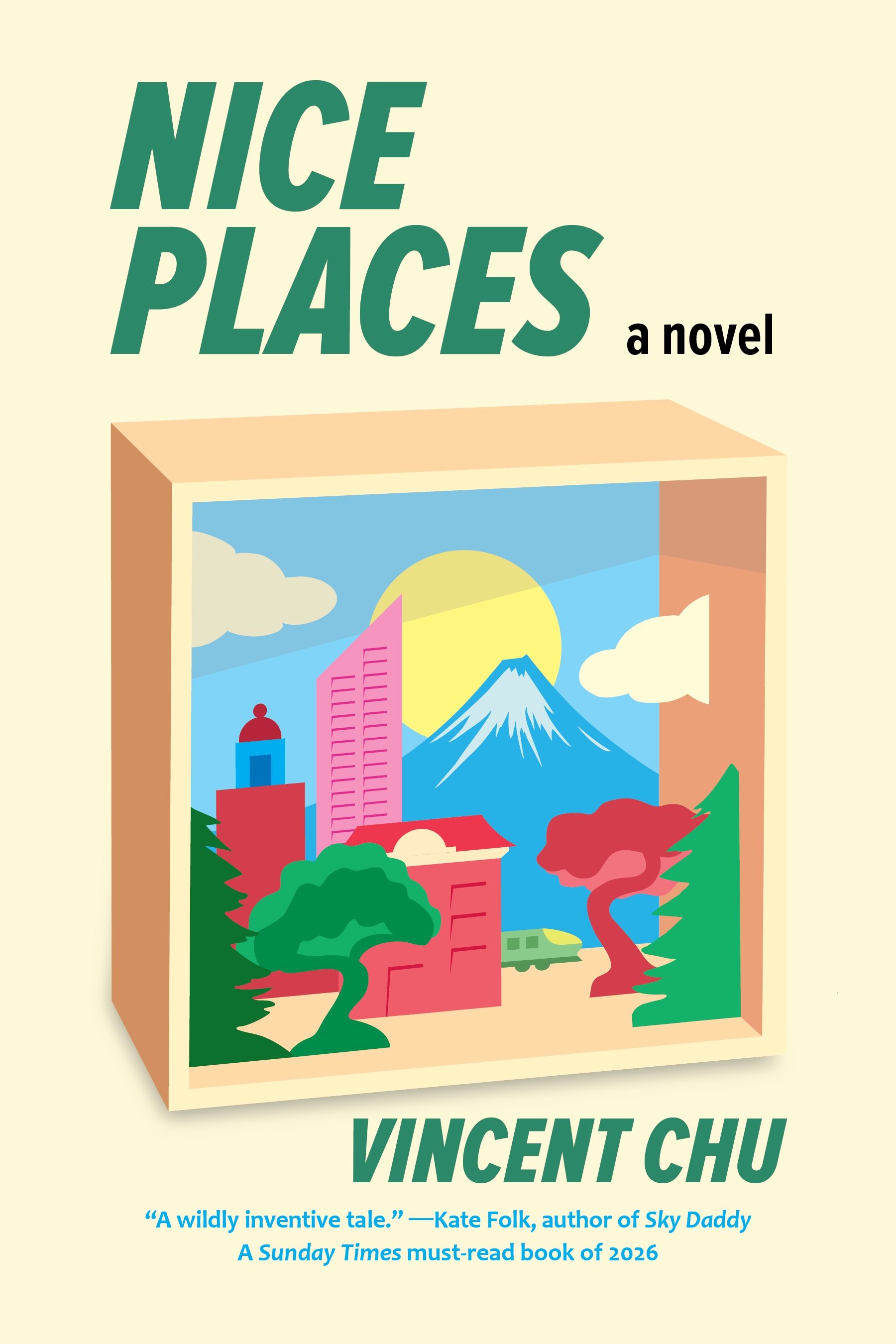
Nice Places
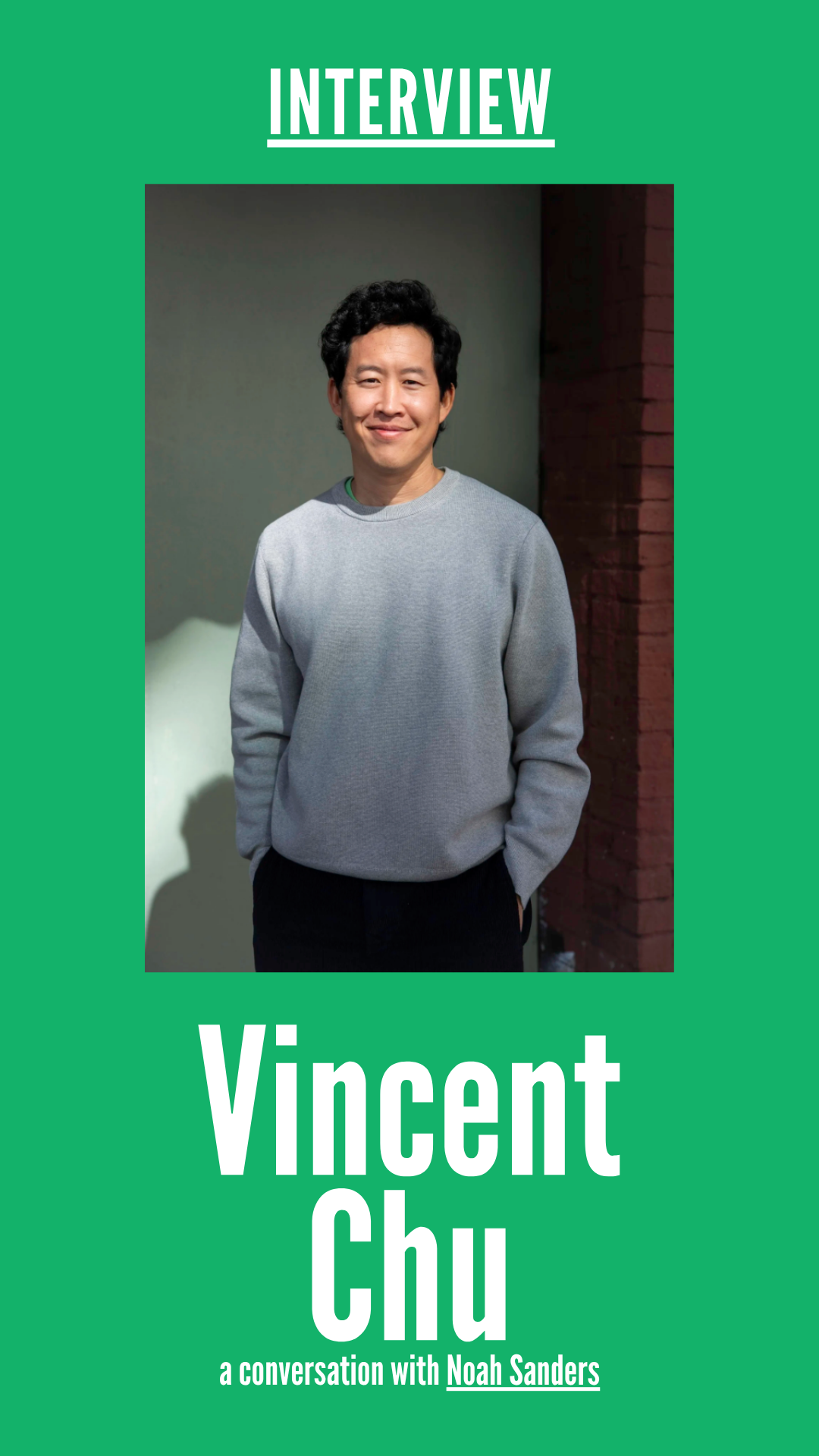
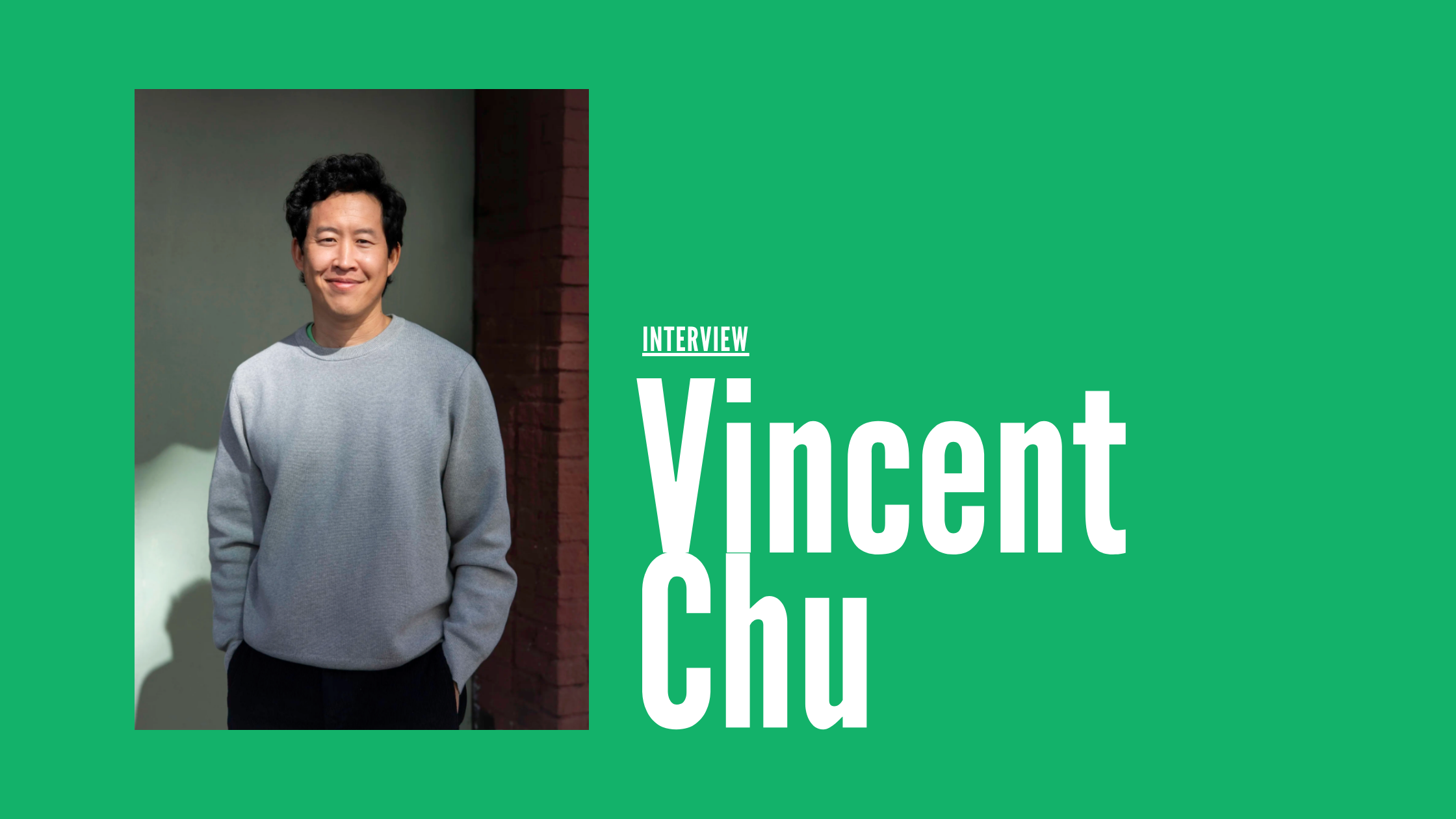
Vincent Chu
Forest Avenue Press
A conversation with
Noah Sanders
The thing about writing a novel is most of the time, it takes forever. It takes days and weeks and months of just sitting and pounding away at the keys. And the story that you started with, the seed that your novel grew from, probably stays the same, even as you and your life, and all the sordid details of it drastically change.
I wasn’t thinking about this when I sat down with Vincent Chu to talk about his debut novel Nice Places (Forest Avenue Press). I was thinking about travel and social media and the artful way Chu pulls apart their modern form. In talking to Chu though—about his life, and my life, and our shared experiences in the world as both writers and fathers and how all of it bled into his charming new book—it became the topic our conversation revolved around. The idea that a novel is a period of your life trapped in amber, and as you grow, you perception of it changes, and how you write it changes as well.
My conversation with Vincent was, to be frank, a delight, an hour of warm chatter, punctuated by Vincent’s casually wise observations. We talked about raising children, and our pasts, and how social media has changed travel (and everything) and about the responsibilities modern society has unconsciously been tasked with.
The article has been edited for length and clarity.
Noah Sanders: I want to start with a three-part question. This book feels so rooted in certain periods of George's life and then in certain periods of your own life. I'd love for you to reflect a little, starting with where you were in your life when you first came up with this idea.
Vincent Chu: I started this book in 2017, right after my short story collection. I had this idea for a novel and started it immediately. I had no idea how hard writing a novel would be. I was working a corporate job, still living in Germany at the time.
NS: You were living in Germany?
VC : Yes. A colleague of mine who had moved to Germany a year earlier reached out. She was working for a Germany-based biotech company and they were looking for an English-speaking communications and marketing person. At the time, they wanted someone to come work at headquarters in person. I was in my late 20s, I had few responsibilities, no car, barely even any furniture, and I moved out there. I ended up staying for five years.
NS: Where were you mentally when you finished the book?
VC: It's funny, because when I started the book, I was about the same age as the main character, Georgie, in my early 30s, and that really informed my perspective and the story. By the time I finished the first draft, I was at the end of my 30s. So the book has been frozen in time—Georgie's world, the technology, how we think about social media—all of it is frozen. But my life kept moving forward outside that frozen world. My worldview evolved, especially with the big life changes: moving back to the US, getting married, having a kid.
NS: Did those life changes make it harder to write Georgie as you got further from the experiences that inspired him?
VC: Strangely, it got easier. I could more clearly see who Georgie was. It was like looking back at a mosquito trapped in amber. I was like looking back at a sort of younger version of myself in some ways with a lot of fondness and maybe a bit of a different perspective. This book both pokes fun at things and celebrates them, and from a greater distance I could do both more effectively. I could see the red flags in what he was doing more clearly, but I could also better appreciate the nobility and sincerity of it.
NS: Did anything drastically change in the book because of your life changes?
VC: The whole catalyst for George's journey is that he wants to find some sense of meaning and purpose. He's been living the life he was always told he should lead and one day realizes it's not giving him the fulfillment he expected. He starts looking for other avenues, travel being one of them. This idea of roaming the earth to find wisdom and clarity. Certainly, having a kid and a family has changed how I look at the questions Georgie asks. But those questions were very true to my feelings when I was in his stage of life, and actually remain today, in different forms.
NS: Do you consider Georgie a reflection of yourself at that age? You were in Germany, you'd traveled—Was that you?
VC: Some of the questions and ideas were certainly mine. Those were things I thought about a lot in earlier years. The kind of existential agonizing you put your friends through in group chats. And the funny thing is, it's not that bad, right? You're not a coal miner. That's why Georgie describes it as a daily existential discomfort. Not dread, not crisis, just a little nagging discomfort. I very much felt that. Even though going to Germany was for a job and relatively safe, there was still something exhilarating about going to a far-away place with no return ticket, not speaking the language, not knowing how it would go. Travel was something I used as a kind of crutch. If I could just have a trip planned for later in the year, I could feel good about the next six months. A lot of people get into that pattern, and travel can become addictive in a way where you start doing it for the wrong reasons. You start asking yourself: Am I actually approaching this with curiosity and an open heart, or am I just trying to reaffirm some fantasy about myself?
NS: I've had that feeling too. Sitting somewhere beautiful, looking around, and thinking: all of these tourists are just doing the exact same thing right now. We're not doing anything new or exciting. We're doing the same thing we’ve always done, just in a different place.
VC: Totally. And we acknowledge it, we accept that everyone else is doing it too, and we all just kind of play pretend together. Say we're at a beautiful lookout or a waterfall, we'll all form a single-file line to give each other the space to take that solitary photo and make it seem like we’re all alone in nature. We let each other pretend.
NS: Georgie has this cousin Eugene, who’s a big, sort of celebrated, experiential traveler Just wants to “experience life.” Everyone knows the type. How does Eugene reflect your thoughts on modern travel?
VC: In George's eyes, Eugene represents the vision of what a true world traveler looks like. He presents himself as intellectually and culturally curious, willing to set aside his norms and just hit the open road with an open heart. He's also a great modern traveler in the sense that he knows how to document and share it all. There's a funny line where George's mom says Eugene knows exactly what life experience he wants on every single trip. He's that intentional. So he represents the worst version of what a modern traveler can look like as well. But as we get more of him toward the end of the novel, both things become true. Eugene is also a very sincere, noble guy who, just like Georgie, is looking for answers and not quite sure where to find them. He's just as desperate.
NS: Eugene trying to reaffirm his life as much as Georgie. He’s almost just an evolved Georgie, and an evolved Georgie is still struggling. I think Nice Places does a fantastic job of not laying judgment on that kind of travel. But is there judgment? Like, Georgie is faking the whole thing, but he still gets something out of it.
VC: And that was always a goal. I don't like positioning the book as 'he wanted to travel the world and discovered everything he needed was in his own backyard'. That's not what it's saying. But I did want to explore the idea. I knew the book was going to be about travel and be something of a subversion of travel. For most of it we don't go anywhere, and we don't know if Georgie will ever go anywhere. But I still wanted to deliver some of the goods: I wanted it to feel like George is getting what you get from travel, even though he's not actually going anywhere.
NS: And he does, to a certain degree — he's doing things he's never done before, breaking out of his mold…
VC: …meeting new people, changing his routine, changing how he looks at things. You don't need to travel thousands of miles to achieve that. The book is also a love letter to cities. When you live in a city like San Francisco, the depth you can explore is just beautiful. Part of the book is asking: How much of a world trip could you simulate within a few miles?
NS: How do you feel about social media?
VC: Just like other parts of the book, I wanted two things to be true. It pokes fun at social media and surfaces things we all find annoying or exhausting about it, but in a matter-of-fact way. I never want anyone to walk away thinking 'social media is bad' or 'travel is pointless.' There are beautiful things about social media, and I think it's evolving so rapidly. So much of the book was written in the 2010s and social media was changing so fast, and I made a conscious decision not to make it a hyper-contemporary dig at whatever platform was current because that would age very fast. I tried to look at it as this timeless thing: Just the idea of sharing. It’s funny, because now that the book is out I'm having this parallel to Georgie. I took a six-year break from social media and now I'm back on it in this very self-serving way to promote the book.
NS: You are Georgie again, but this time with your book as the travel.
VC: Totally. All the anxiety about the performance of your posts, thinking about how people will receive them, and then realizing your followers are from so many different parts of your life—childhood friends, old colleagues, family, neighbors.
NS: One of the things that grosses me out about social media is when I realize I know so much about someone's life and they know nothing about me. It's not a relationship, it's approved voyeurism.
VC: Georgie comments on that in the book. He has this idea of an old colleague who had kids, and now he's going to watch those kids take swim classes for their whole lives without ever actually meeting them.
NS: Social media also creates these guilt pathways. You stay connected to people you would otherwise have naturally drifted from, and then getting off social media becomes harder and harder because you feel like you'll lose them, and because it’s your choice, you’re the guilty party.
VC: It’s strange to think about how much mystery there was in the world before social media. You'd have a friend from an old school, change schools, and wonder for the rest of your life what happened to them.
NS: Surprise doesn't really exist anymore. Do you think Georgie is knowingly creating a sense of mystery, or does he just need to because of his situation?
VC: His urge for change is so strong that his energy is pushing him forward even through the roadblocks, including the very first one, losing his passport. There's this advice his cousin Eugene gives him early on: never refuse an invitation when you're traveling. I think it says something sweet about Georgie that he embraces that mantra so strongly and uses it to carry himself through the first months of the “trip”.
NS: What I found fascinating is for Georgie, social media is both the trick he’s pulling on everyone, and the thing he needs to discover himself. But to really become his truest self, he has to let go of it. Do you think we need to go through that layer of performative action to find what reality actually looks like?
VC: I don't think so. The book pokes fun a little at the idea of the dramatic digital detox, of declaring 'I'm getting rid of social media.' I never wanted anyone to think George's journey ends with him throwing his phone away. I think it's about how we learn to coexist with these things. We live in a world with things that can be misused or harm us if not managed well—social media, smartphones, technology, AI. It’s up to us as good humans, as noble creatures in this universe, to figure out how to coexist with them. It doesn't have to be black and white. It doesn’t have to be “I shun it,” or “I'm obsessed with it.”
NS: Which is interesting because you were writing into a late 2010s era when coexistence with social media was something we thought less about. People were just like, 'this is my life now.' Now, ten years later, we've been through the highs of it and people are starting to bottom out. It's the predominant media source of our time and we have to figure out how to live with it. But when we first got Instagram, when you heard about people doing what Georgie does, you thought it was crazy, and now everyone is trying to be that version of themselves. You became a parent during the writing of this book, and I wonder, now, looking at your life or at Georgie’s, how did that affect the writing of it?
VC: I think the book still rings true to that period. I look at it as a genuine expression of that time, for me and for a lot of people. I don't want to be so reductive as to say having a kid means you now have meaning and purpose. The journey of leading a meaningful life, putting in the work to figure out what that means for you, that's lifelong. Whether you're a parent or not. It just manifests differently. For me now, I don't travel nearly as much, and when I do it's very different, I'm just trying to make sure we all survive the trip. I can't pick up and travel the world. But the questions Georgie asks are still relevant. I just would maybe answer them differently today.
NS: Was there an editing pass you did on this after your kid was born?
VC: I did do one fairly significant rewrite. My son must have been about one at the time. Part of it was my changing worldview, but it also came from some frustration with the publishing journey. The book had been on submission for a year and a half, we were getting some close calls and encouraging feedback. I got to the point where I thought: I know what this book is about, and I don't want it to read as subtle or quiet or forgettable. So my goal during that rewrite was to turn up the dial. Life is short. Let's just go there.
NS: What did you turn the dial up on?
VC: Some people have noted that the ending really opens up. A lot of what you see there, wasn't how the first draft went. In the original version, the reaction to his a certain interview was shame and public condemnation. But I realized that read as more of a 2010s response. Today, people would love that stunt. So I flipped it: Everyone thinks it's amazing, he's celebrated for it, and then he spirals anyway. Because now what's actually meaningless is being celebrated as meaningful and that’s what sends him into that search for something real.
NS: I found it really interesting that this is a book about location—real or created—but a book that takes place in a sort of amalgam of a big city. A little San Francisco, a little something else.
VC: Right, the book doesn't take place in San Francisco. A lot of people assume that, but it's a fictional, unnamed city. In my head, the city is more inspired by German and European cities. There's a central train station at the city center, for example, which you wouldn't commonly have in the US. It's denser, easier to navigate between neighborhoods. In a sprawling American city like LA, the story just couldn't work the same way. I was also always thinking of early David Fincher films like Fight Club or Se7en — they take place in nameless American cities that feel like New York or Seattle or San Francisco without ever committing to one. That always felt right for this story.
NS: Why, in a book so much about travel and location, did you choose to create an amorphous city rather than a real one?
VC: I wanted the city to feel slightly absurdist and off-kilter, and having it unnamed adds to that. There's also something that felt right about putting a character who doesn't fully know himself in a city that isn't fully defined.
NS: What does this book say about actually traveling versus just the mindset of travel? Do you need to travel?
VC: It's an interesting question, especially today. We talked about the removal of mystery, and right now you can go on YouTube or Instagram and find a hundred reels of any destination in the world, from every angle and perspective. Whereas I'm old enough to remember buying a Lonely Planet before a trip and having that be your entire window into a country—the history, the culture, the attractions. That was the full perimeter of what you knew going in. Now you can see so much before you even arrive. I think it comes down to the responsibility being on us to do the work, to coexist with travel, with social media, with all these things, and to get what we actually need out of them in ways that work for us. Travel has been an amazing thing in my life. It's informed me in profound ways, both intentional and unintentional. And as travel culture keeps changing and technology keeps changing, it will always fall to us to figure out what it means to be a good traveler. That's a daunting task, but also an inspiring and beautiful one.