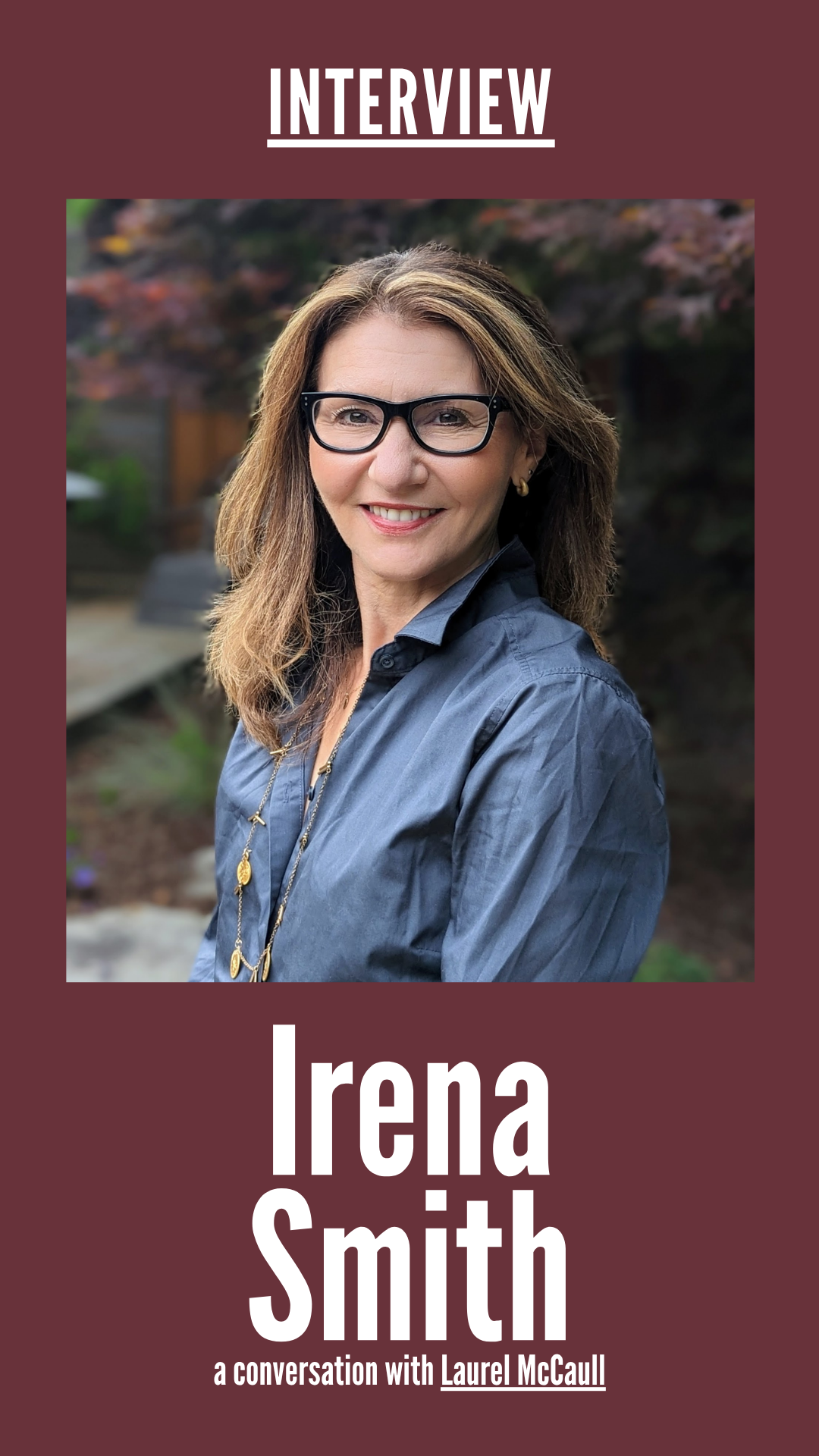
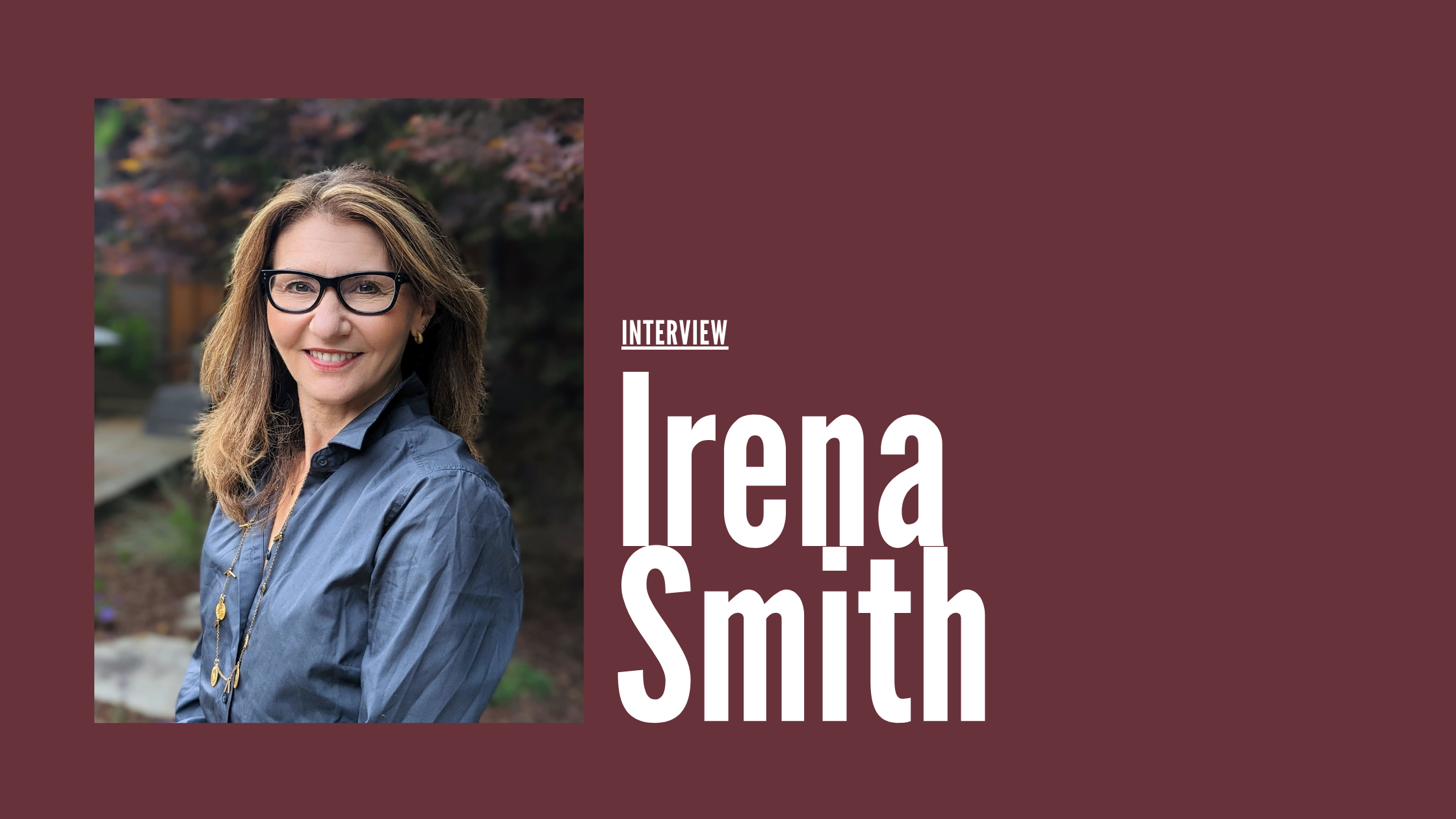
INTERVIEW: Irena Smith (Troika)
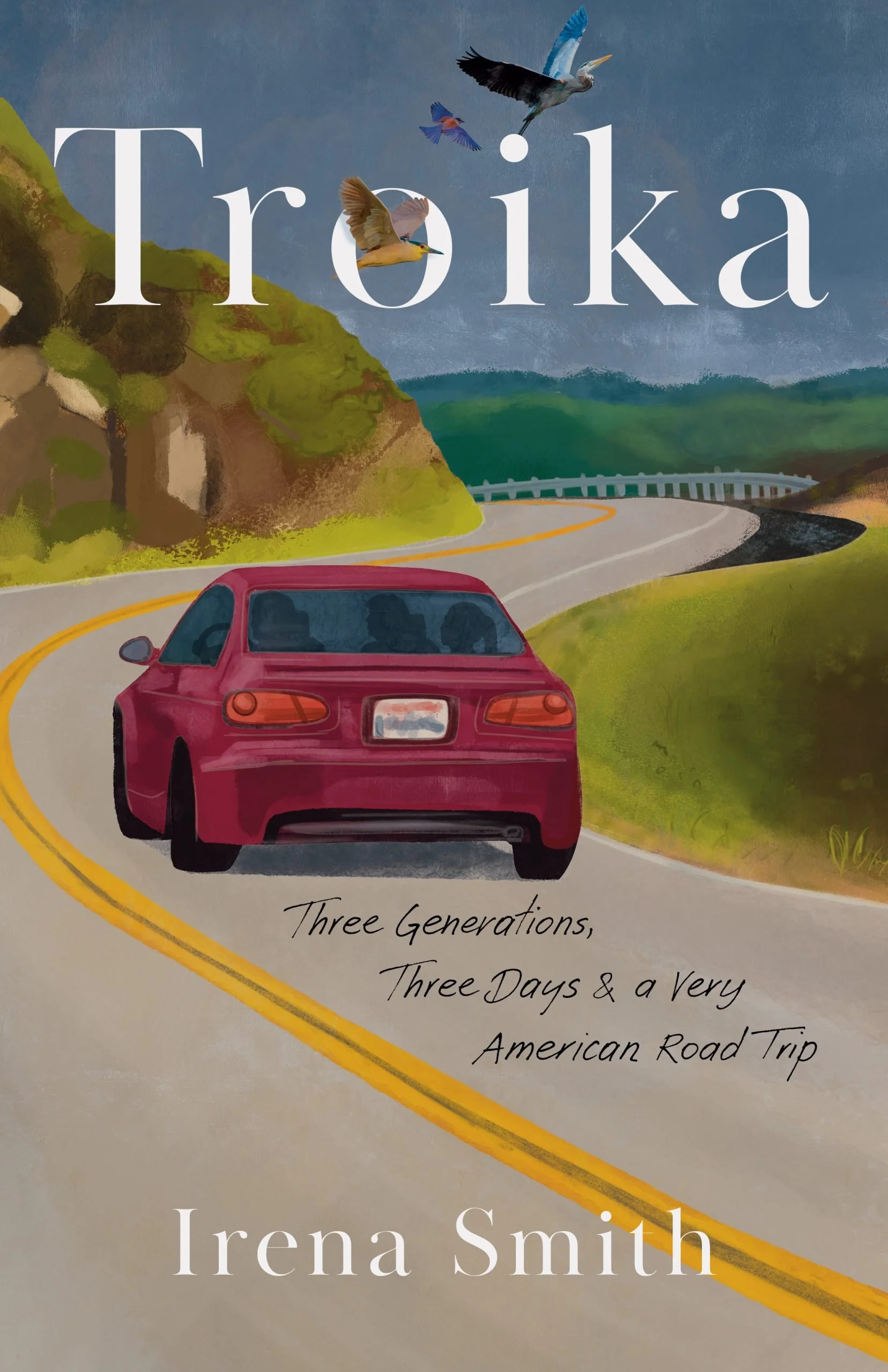
Troika:
Three Generations, Three Days, and a Very American Road Trip
Irena Smith
She Writes Press
A conversation with
Laurel McCaull
In her latest memoir, Troika: Three Generations, Three Days & a Very American Road Trip (She Writes Press, 2026), Irena Smith reveals how a short drive down California’s Central Coast incited a greater journey into her family’s past, as well as her own triumphs and regrets as both a mother and a daughter.
Born in Soviet Russia, Smith emigrated to California with her parents when she was only nine years old. She went on to receive her PhD in Comparative Literature and work as a college admissions officer and counselor, a career that inspired her first book, The Golden Ticket: A Life in College Admissions Essays.
With Troika, Smith continues the project she started in The Golden Ticket, unweaving the complex web of generational trauma and societal pressures that drove her pursuit of "success" at any cost. Three days on the road with her mother and daughter unite the trio into a band of merry adventurers, as they weather storms, encounter terrifying beasts, and spend hours snuggled around a laptop watching The White Lotus.
I sat down with Smith over Zoom to discuss the book and her reimagining of the American road narrative. Whether we’re talking TV shows or the immigrant experience, Smith leads with curiosity, self-awareness, and a keen sense of humor–all the qualities you’d want in a fellow traveler.
This interview has been edited for length and clarity.
Laurel McCaull: In the chapter “Points of origin,” you write, “When I first told my husband I was writing a book about our three-day road trip, he raised his eyebrows and said, ‘That’s a story?’” You go on to explain that stories always live in other stories, like Russian nesting dolls, and that everything is related to something else. Throughout the book, you weave in several anecdotes and revelations about your family’s past, your emigration journey, and your own home life. What was it about this road trip that felt like it could hold all these other stories?
Irena Smith: A lot of different things. One is I went into the road trip with extremely low expectations, because from the beginning, I was like, if we could just not die, that would be good. And then so many things happened that seemed kind of predestined or fated. Like my mom and my daughter ended up loving The White Lotus, which I had just binged, and we bonded over that. We drove by random things like the ostrich farm, and I think, without meaning to, my mom and I just pelted my daughter with stories.
One of the reasons we added Solvang to the trip was that both my grandmothers had been there on a Russian-language tour of the Central Coast. None of us had ever been, so the grandmothers came up in conversation, and then they kept coming up, and by the time we got back, I felt like the trip was a little bit like a clown car. It was only three days, it was only 500 miles, and yet so much had happened, both psychologically and physically, that it felt like a container wanting to burst, and so I wanted to write about that.
LM: The trip does feel like a catalyst for transformation. As does the act of writing. In the chapter “Sandpipers,” you write: “The story itself is simple: car, rain, road, hotel, television show, coffee, ostriches. But then the past rolls in and the car fills with clamorous ghosts. The ghosts want to be a part of the story.”
IS: Gives a new meaning to ride or die.
LM: Each chapter is very short, only about one or two pages, and you jump around in time a lot. It creates this beautiful tapestry of different characters and storylines that overlap and bind together. What was the process like, dipping in and out of these different narratives, and how did you keep track of them?
IS: I’ve always been in awe of works that are nested narratives. They seem to be constructed out of whole cloth, and you’re like, wow, how brilliant to put it together that way. But at least in my experience, the truth of putting the pieces together was much more prosaic. I have fairly recently been diagnosed with ADHD, so my mind tends to work in looping and associational ways. Sometimes I make connections that make sense only to me, and then I have to work backwards to explain how I arrived at that point.
But two things really helped me. First, my developmental editor, who saw an early version of this and really pushed me to make the trip more of a backbone of the story. At first, I was a bit like my husband, like, “That's a story? Who wants to know that?” And so what helped was going beyond the trip to answer the question: why are we like this? Which I think is really a fundamental question at the heart of any good memoir—how have we arrived at this point in time, and who were the people and the circumstances that shaped us? So it became easier to shape the narrative with that question in mind.
The second thing, weirdly, was improv. My husband and I both do improv, not very well, but we have been taking classes and very amateurishly performing with friends of ours. One of the ways that you build a long-form improv performance is you start out with a scene based on an audience suggestion, and you look at it in terms of what can we come back to? So if somebody in that first scene mentions a grandmother, we’re going to want to see a scene with the grandmother. That’s very satisfying to the audience because they're like oh, we were in on this conversation. So I had this little epiphany when I realized I could use that technique to try to tell this story.
LM: You wrote your PhD dissertation about physical and semantic displacement in the novels of Henry James and Vladimir Nabokov, both immigrants in their own rights. And it was in writing this dissertation that you claim to have “transcended the indignities of being an immigrant” because you “could maneuver seamlessly between and within cultures and languages.”
American higher education often seems to encourage and value a certain kind of intellectual objectivity over cultural identity. Do you see any problems with this? How has your perspective on the idea of “transcending” your past changed?
IS: Significantly. So I went into graduate school partly because I had no idea what I was going to do with my English degree after college, and partly because it just seemed like an intellectually pure and noble thing to do—says everybody who goes into academia ever, only to be bitterly disillusioned.
The part you read was written very much tongue-in-cheek; I didn't realize at the time what I was really doing. I just thought it was kind of a neat fit that James wrote about expatriates in Europe and Nabokov wrote about immigrants in America, none of whom fit. It was only later that I realized that my subconscious thought was: “But I fit, I did it, I came to America, and you can’t tell me from anybody else.”
LM: Do you feel like you have more permission now to identify with your roots?
IS: When we first came here, I wanted nothing to do with my roots. I had an identifiable accent, and I had the weird lunches with the foil-wrapped chicken, and I was like, “Oh no, we’ll be having none of that.” And then by the end of high school, I realized it’s actually kind of cool, so I leaned into that a lot in college and grad school. But I think that in academia, you're not really meant to write from that place of identity. You are meant to be dispassionate and objective, and I feel like I have a lot more permission to just say things as a creative nonfiction writer as opposed to an academic writer. I was actually looking over my dissertation while writing the book, just to remind myself, and I was like, “Wow, that is an insufferable dialect.”
LM: The road trip is taken by three women from different generations, which makes for plenty of comedic and heartbreaking moments. What is it about matrilineage that interests you, and how does this contrast with your previous study of predominantly male authors?
IS: I think that male or male-centered stories of travel tend to be about getting something. They tend to be obtainment-based, for want of a better word. You have The Golden Fleece, or Nabokov’s Lolita, where someone is in pursuit of something or someone. I think going to a place is not quite the same as getting something from it, and with the three of us, there was never jockeying for who's really in charge of this trip. My daughter was in charge of the music, my mom was entertaining us all with anecdotes, and so it felt very cooperative. It felt like we were all learning from each other and about each other. I don't know if that's a woman-centered thing specifically, but I think it would have been a very different trip had there been men present.
LM: That’s such a huge part of why I love that The White Lotus plays such a role in this for you because, yes, you went to see the ostriches and you got the pancakes and the coffee, but at the end of the day, all any of you wanted to do was go back to the hotel and watch the show together. It offered this beautiful bonding experience that theoretically could have happened anywhere, but it becomes the heartbeat of this particular story.
IS: Exactly, which was probably one of the most delightful surprises. It was still churning around in my head, so I was like, “Well, I'll show them an episode, and maybe they won't like it, whatever.” But they were so locked in from the very beginning, from that opening song. It really is like a siren song; it just pulls you.
LM: I’m glad you brought up the theme song because I noticed a parallel in the book. You often end a chapter on a moment of suspense or a hint that something is amiss, in the same way that The White Lotus theme portends a kind of doom and destruction. You do mention your son’s autism and your daughter almost dying, which is so horrific, but I never quite felt like there was one big reveal or climax. It’s a difficult tightrope to walk–protecting your family’s privacy while still keeping the reader in suspense. Did you choose to leave things vague because your other memoir goes into more detail, or was there something else going on there?
IS: I love that you picked up on that unease because it definitely was a tightrope. I do go into more of the gory details of what it was like to live in our house, primarily during my daughter’s mid-to-late adolescence, in The Golden Ticket. The reaction to that book was mostly extremely positive, and writing honestly about what it was like opened the door for people to come to me with their own struggles. And then a small but vocal minority was like, “You shouldn't have done applied behavioral analysis with your son, you shouldn't have this, why would you put all these things in the book, why would you parade your children’s trauma?” So part of why there wasn't a big reveal is that I was trying to protect their privacy more. But also because after close to two decades of very tempestuous family life, I’ve come to the conclusion that there really isn't a big reveal. There's unease, and occasionally, terrible things happen, but you still have to figure out how to move forward.
LM: In your role as storyteller, you seem to feel both honored and burdened. You describe yourself as a magpie in one chapter, saving everything from empty lipstick tubes to other people’s memories. But there are other moments when you rebel against this responsibility, such as when you decide to donate your wedding dress toward the end, even though you knew it would upset your mother. You describe the dress as “an albatross” and declare that “there is only so much I can hold.” Can you talk more about that conflict, and how you balance writing about the past with trying to, as you say, “move forward?”
IS: That was a real tension while I was writing. And in the interest of full disclosure, my mom and I still haven’t talked about the wedding dress. There was a lot of back and forth in my mind while writing—do I put this in, do I not put this in, because getting rid of it felt so significant, but even though I’m fifty-five years old at this point, I’m like, my mom is going to kill me. She loves the book, but she hasn't said anything about the wedding dress specifically because it obviously meant a lot to her.
I'd like to think I've transitioned from being a magpie for physical things to being someone who remembers stories. Who is more willing to give things away, but still tells the stories about those things—I would like to think that that's my growth.