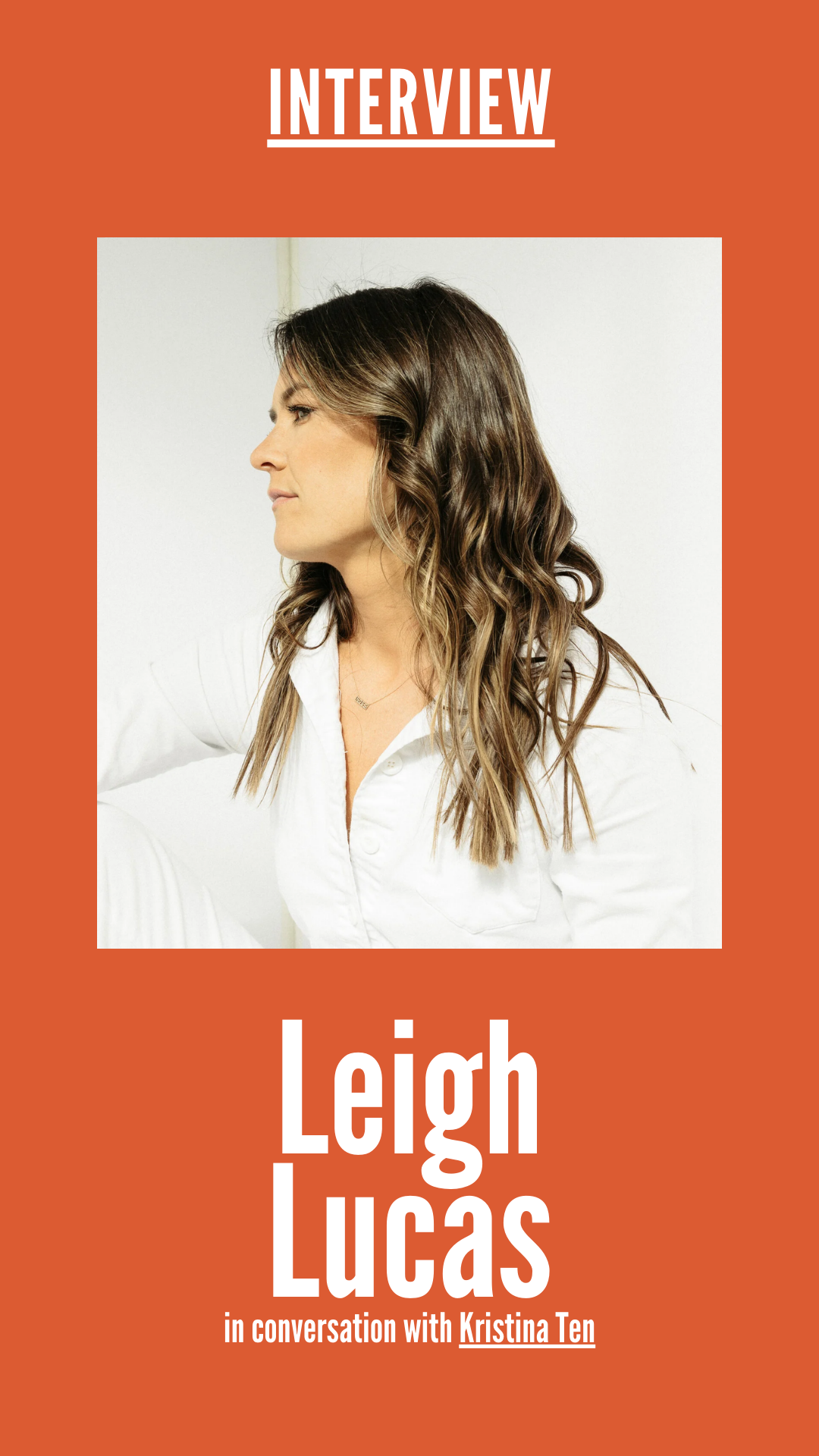
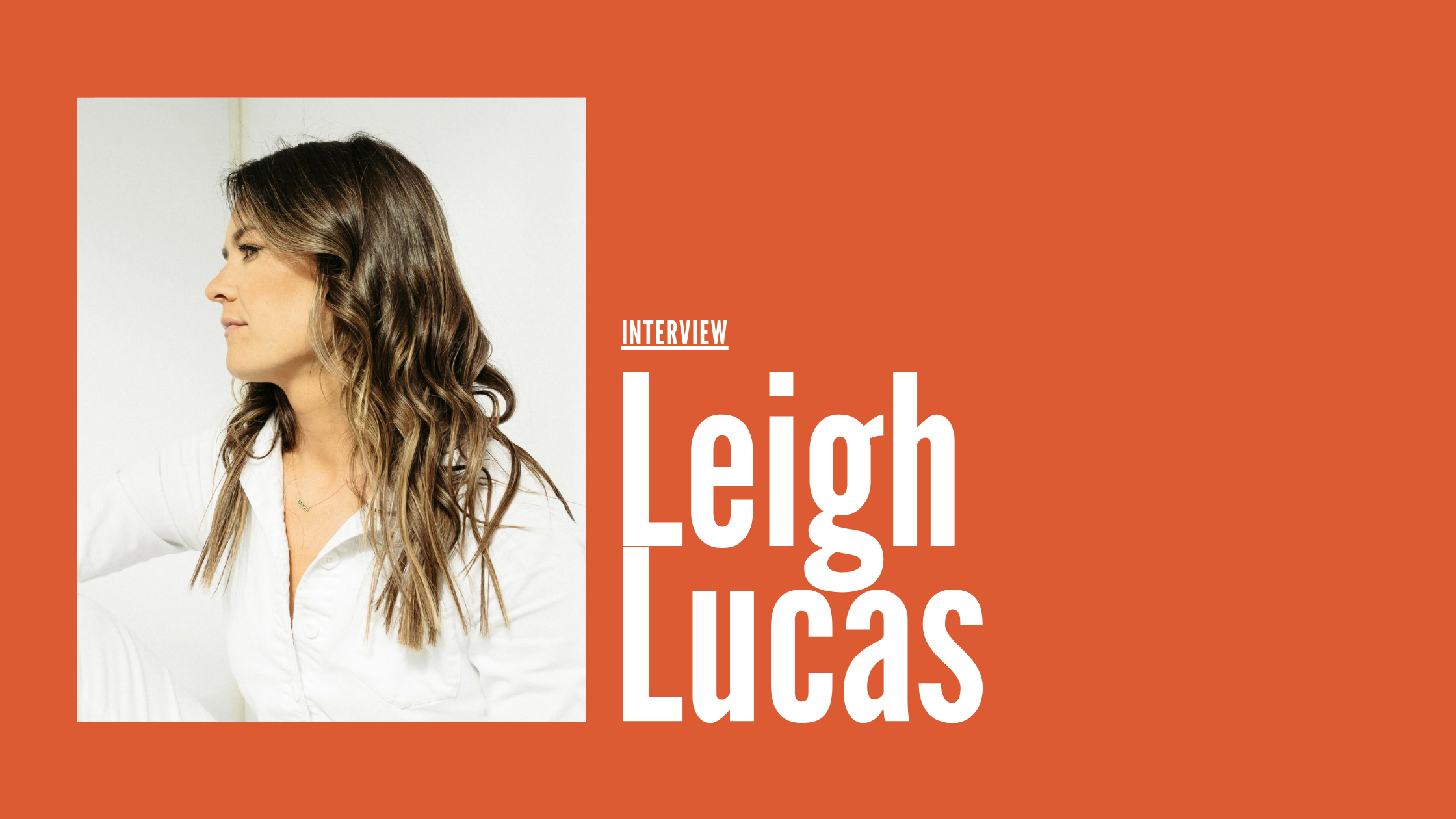
INTERVIEW: Leigh Lucas (Splashed Things)

Splashed Things
Leigh Lucas
BOA Editions
A conversation with Kristina Ten
Leigh Lucas and I had unknowingly been circling each other for years. Though we both found our literary home among the Bay Area’s bookstores and bar readings, we chatted for the first time only this year, ahead of the publication of her debut poetry collection, Splashed Things. While she still calls San Francisco home, I’ve traded its rolling fog for white-out blizzards in Rochester, New York: a small city in the western part of the state that I expect many folks haven’t heard of. So imagine my surprise when I learned her book’s publisher, BOA Editions, is based just minutes from where I live. How delightful, how improbable, this continued circling.
The act of circling would stay with me as I read Splashed Things, a collection tracing the months and years after the suicide of the author’s boyfriend, who died jumping off a bridge. Forming a candid, prismatic exploration of loss, love, and living on, these poems look at the tragedy from many, often unexpected angles. They are especially attentive to the spaces around the event itself, in their search for a means with which to speak the unspeakable, survive the unthinkable, and reorient oneself in a profoundly changed world.
Leigh was kind enough to chat with me over email about Splashed Things.
Kristina Ten: Partway through the book, we meet the speaker and her boyfriend during their friendship, when “[h]e’d come over with his poems, lay them on the floor and take off his shirt like he was about to lift weights.” It’s a powerful image—poetry as bare-chested, sweat-soaked physical endeavor—in a collection preoccupied with the physicality of the human body. What did your process for assembling Splashed Things look like? Was it anything like that scene?
Leigh Lucas: Assembling Splashed Things was a pretty painstaking process. At first, I did print out my poems and lay them out on the floor and pick each one up in my hand in the order that felt correct. This was how I culled the collection too. Poems that I kept leaving on the floor, I realized were nonessential—usually poems that were repetitive or too theoretical. While I knew I wanted this book to spend most of its time in the body, most of the early poems were a little cerebral, mostly about how hard it would be to write this book. I kept just a couple of those poems (like “Here’s the rub, fickle memory, swirling time” and “The bloody part comes”).
Once I finally ordered it right, each page felt like it inevitably followed the next, even when I’d put the collection away for weeks at a time. After I believed the book to be totally done, so much so that I started working on something else entirely, I got the advice from a reader I trust that the back half of the collection needed more poems. At first it felt like an impossible task, but the time and space away from the work had given me the perspective I needed to see the gaps in the collection, things I thought I’d said but hadn’t, and things I was finally ready to say. Those poems made the collection whole.
KT: Splashed Things is a vulnerable work: about grief, ways of drowning in and resurfacing through it. Yet, for me, the vulnerability comes through most not in the visibility into the speaker’s pain, but in the speaker’s reactions to that pain, which often cast her in an unflattering light. In the throes of grief, she misbehaves, she tests loyalties, she is belligerent and reckless with her own life. We catch her at ugly moments (typing “suck a dick” into the company chat) and we witness her shame. Yet though the speaker’s circumstances are heart-rending, she doesn’t seek sympathy.
LL: Some of my favorite books are about good people behaving badly because I find them brave and usually pretty funny. Brutal honesty, even when the truth was unflattering, was one of my aims with this collection. I asked myself, what elements of this experience would I include? What would I leave out? These questions felt impossible until I started focusing on some of the ugly things, some of the funny things, some of the shameful things. It gave my story its voice.
As for shame, when I was in the throes of grief, most mornings I would wake up with a sense of self-consciousness at best, and a sense of self-loathing at worst. And I felt embarrassed all the time. I think there is this temptation to think that when life really tests you, some perfect inner hero will unveil herself, but that was not true in my experience and I wanted to be real about that.
KT: As much as Splashed Things is a meditation on grief and loss, it’s also a meditation on making art about these topics. I love this line: “See an actor tries to cry / but a person / a real person / tries not to.” In the book’s refusal of sentimentality, its trying-not-to-cry, it moves deftly between registers: at one turn lyrical, tender, and fiery-throated; at the next plainspoken, detached, even academic I’m also thinking of the rule of peaks and valleys in horror fiction, that a good horror story should alternate between high-intensity emotional peaks and calm, level valleys. Could something similar be said for your speaker’s “careful theatrics”?
LL: I love how you put that. Yes, I thought a lot about shifts in tone and in diction, and employing these contrasts in registers in order to create particular emotional effects for the reader. I knew that because of my subject matter, the book risked being too sad, too heavy, too dark. It was both too much to put a reader through, and also not the book that would be representative of the person I lost—someone who was joyful, vibrant, and funny. But most of all, I shifted between lyric language and plainspoken language for just the reason you describe, to create emotional peaks and valleys. These were, indeed, my “careful theatrics.”
Even though of course the material of the book is sad, I really wanted the book to feel warm and I wanted to take good care of my reader. I didn’t use the classic received forms in this book, but I did borrow forms like those you mention—clinical and dry ones—like medical questionnaires, fill-in-the-blank apology note templates, etc. They helped me distill that sense of cold reserve I was going for. I was struck by the absurdity of so many aspects of life when I was grieving, and some of these borrowed forms hope to capture that absurdity.
KT: At times the speaker seems resigned to the futility of metaphor, while other times she embraces it: “To cherish a memory. / To Keep It Safe. That’s cute. / How to resist the urge to take it out back / And shoot?” As someone who works across the horror and fairy tale genres, I know this seesawing well: the impulse to, on one hand, present the bad thing baldly, and, on the other hand, wrap it in metaphor—weighing what feels honest against what is bearable. I appreciate the fairy tale for its abstraction, which can make the unapproachable approachable, though slantwise. Thinking about this, I begin to find bits of fairy-tale sensibility speckled throughout Splashed Things: in figures like the Thin Man and Toad Girl, in the fable-like “So I hear in heaven the cows have no spots.”
LL: I wanted to use every tool available to me for this collection, whatever could get me closer to the truth of a feeling, and sometimes that meant being literal and direct, and sometimes that meant using metaphor. The poem that you quote above reminds me of Emily Dickinson, who instructs us, “Tell all the truth, but tell it slant.” That was the only poem that employed end rhyme and I loved that it contrasts so much with all the poems around it.
The fairy-tale sensibility felt like a natural one to employ to capture an experience that was so surreal, and that sometimes I felt like I was spectating instead of experiencing.
KT: Beginning with a rebirth of sorts—“In my new life, I must learn everything again”—the book is shot through with imagery evoking childhood. The speaker describes her poetry as “a child’s hand in a fat grip on a fat crayon.” In therapy, she performs exercises for children. At the end of a scientific study of splashes comes an unabashed “Kerplop!” Are there certain childlike qualities you hope to hold onto as a poet? How might they serve those of us writing about grief?
LL: When I was still groping around for some insight, long before I started writing this book, one of my friends said the lines from the children’s book that goes, “We can't go over it. We can't go under it. Oh no! We've got to go through it!” Out of all the earnest and insightful words offered to me by loved ones about my grief in those early days, they ended up being the lines that resonated with me the most. I’ve since read that grief really does have an effect on cognition and the brain, but at the time all I knew was that it felt like I needed to relearn some of the basics around social norms and survival.
Grief aside, I do find that there are some childlike qualities I want to retain forever, because they help so much with poetry, like noticing things as if for the first time, asking “Why?”, and cultivating a sense of wonder. There is a lot to be said for a simpler, more childlike way of stating things. Even now, there are a few of my kids’ picture books that I love deeply because they get at some essential truth in a way that moves me. I think this is why I love poetry so much. It’s ambitious, a very compressed form that tries to communicate a truth.
KT: I wasn’t familiar with Doc Edgerton’s milk-splash photography before reading your book. I’m so moved by this perfect, unlikely, microsecond-long coronet! The idea that somewhere—in a moment of destruction, of surface-breaking, of sinking or dissolving—there is, ever so briefly, something majestic, noble, holy. It feels connected to the speaker’s fervent archiving and her reluctance to let anything disappear, as any one of those things could be holy. That is writing to me, I think: the rigorous, lifelong search for the holy in the splash.
LL: Images of Doc Edgerton’s milk-splash photography were saved everywhere on my computer and on my image board for this book. I manipulated these images and imposed words on top as a kind of collaging project that gave me a different entryway into the material.
KT: Late in the text, we meet the speaker’s child, named Penelope: “It means woman with a web on her face but it also means weaver.” This brings to mind the Greek myth of Penelope, who staved off suitors when her husband, Odysseus, didn’t return from the Trojan War by insisting she must first finish weaving a burial shroud for his father. She would weave during the day, then unravel her weaving at night. Thus the idiom “Penelope’s web” refers to a task never completed, sometimes intentionally left unfinished—perpetually doing, but never done. How does this resonate, now that your debut collection is out in the world? Is there a feeling of completion or closing, or is the work ongoing?
LL: Yes, I do think the task of finishing an elegy, or coming to an ending in a book about loss, is an impossible task, and not really one to aim for. I was so happy to include my daughter in the ending of the book, and her name could not have been more perfect for that poem near the end.
This book going out into the world actually does feel a bit like a closing because now I’m giving the book over to others who will have their own unique experiences with it—ones that are completely out of my control. Since the person I wrote this book for never got to publish their debut poetry collection, I like to imagine that this milestone is one I kind of share with him.
Next I hope to write more about the life that has gone on after loss, one that’s been filled with some wonderful things, like meeting my husband, having our daughter and son, and growing as a human being and as an artist.