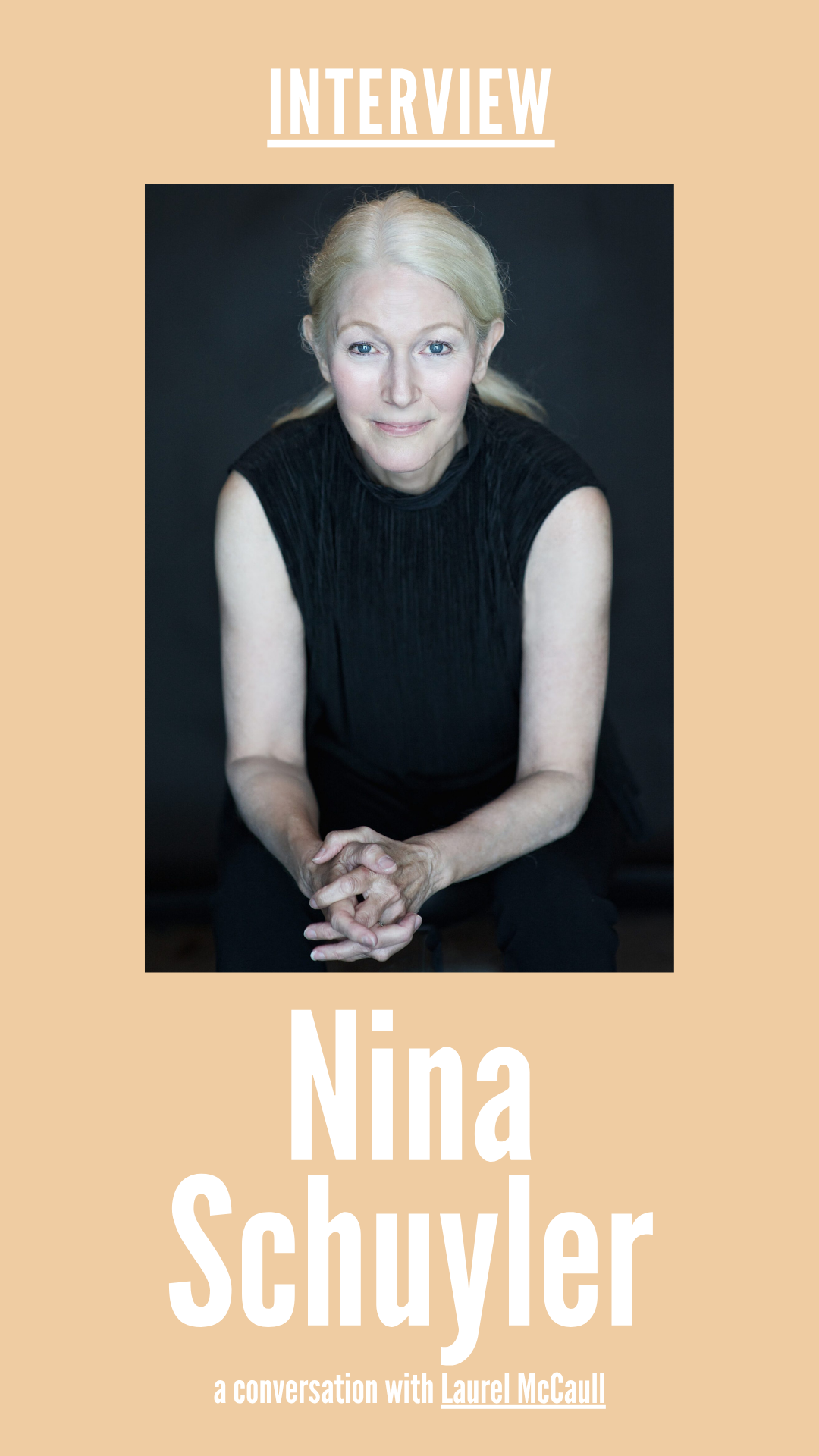
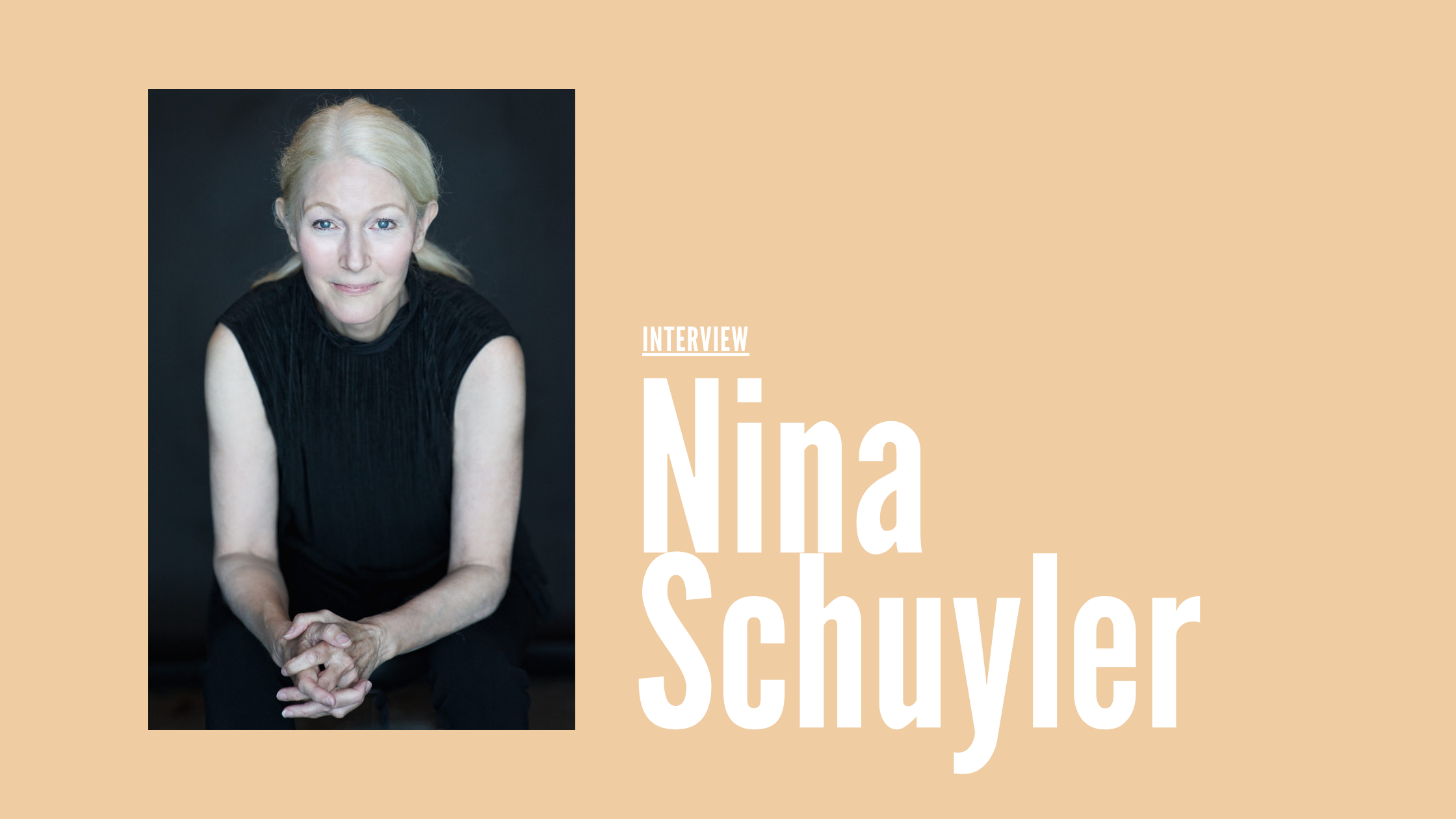
INTERVIEW: Nina Schuyler (Open the Floodgates)
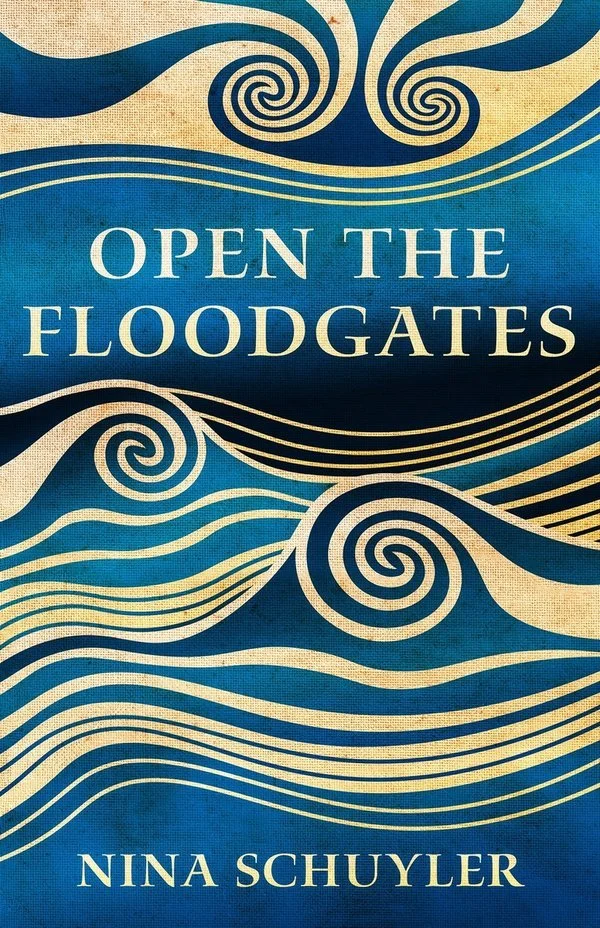
Open the Floodgates
Nina Schuyler
Reverberations Books
A conversation with
Laurel McCaull
Since 2008, governments and Indigenous tribes around the world have started granting legal personhood to rivers within their borders. While Indigenous peoples have always recognized the rights of nature, the widespread codification of such rights suggests a radical new paradigm. But what does it mean for a river to be a person? In her forthcoming novel, Open the Floodgates (Reverberations Books, 2026), Bay Area author and professor Nina Schuyler grapples with both the practical and philosophical consequences of that question.
As a freshly minted “person,” the River in Schuyler’s story appears in local court to fight for its right to exist and flourish. Over the years, it has fallen into decay, drained of its biodiversity and choked with chemical runoff from a nearby farming corporation. Some residents support the River’s case; others think it’s a waste of time. What becomes clear, however, is that no one has remained untouched by the River and the web of life it sustains. In the courtroom and beyond, the point of view constantly shifts, flowing from the River to the townsfolk and back again, a liquid consciousness that briefly takes the shape of its container before moving on to the next vessel. We see the River’s plight reflected in each character as they reckon with the ways they’ve stewarded their own lives, for better or for worse.
At times, Schuyler’s sentences feel like water lapping at your feet, soothing and gentle; at others, they take you under like a riptide, depositing you somewhere you’ve never been before. This book left me disoriented in the best possible way—drunk on possibility, exhilarated by this new way of thinking about the world and my place in it. It is climate fiction at its finest, when the message does not take precedence over the story itself, yet still you are left with an irresistible urge to do something. Schuyler is a master of this art, and I was thrilled to get the chance to ask her my most burning questions over email. Our conversation touched on Schuyler’s law background, the rights of corporations, and how she personally resists “the way of the too hot world.”
The article has been edited for length and clarity.
Laurel McCaull: While reading your book, I kept thinking of Mrs. Dalloway and the way Virginia Woolf dips in and out of different perspectives in her writing. I was delighted, then, to see that you actually thank Woolf in the Acknowledgements section. You credit her with inspiring you to “take her stream-of-consciousness style and turn it into a river-of-consciousness style.” Did you come up with that wonderful term, and why did you choose to tell this story that way?
Nina Schuyler: Virginia Woolf is an inspiration—her inventiveness, her desire to redefine form and story, and the rhythm and sound of her sentences. Robert Creeley said that form is an extension of content, and I agree. I came up with the river-of-consciousness style because I wanted the story to feel like water swishing on the page. Humans have a lot in common with the River; we’re watery beings, with our body composition and our need for water. I also wanted the story to be polyphonic with multiple points of view to render the myriad relationships between the characters and the River. It complexifies; we see the tangle of motives and desires. The structure also challenges the view that we are isolated, self-contained beings.
LM: Amid the shifting perspectives, there is also a “you” and an “I.” In your view, who is the “you” and who is the “I”? How does this relate to the river-of-consciousness?
NS: The first-person omniscient narrator is opinionated and can move the story lens vertically, looking at the town from way above, and then zoom down to the tall grasses or the muddy bottom; or when a couple is having a romantic moment, butt in and say, let’s give them some privacy. It’s a voice that harkens to 19th-century literature, the storyteller who is a container, holding the entire story. And yet, in my novel, it isn’t a complete container, because what does that voice truly know about the River? The River is inexhaustible. In the end, the River refuses to be held in that container. So it was also a way for me to nod to the reader, a nod that says, yes, this is a work of imagination, and the River’s voice is necessarily an invented one.
LM: When the narrator is speaking as the River, the language is very lyrical and onomatopoeic. In fact, the text itself appears as a winding river on the page, like a concrete poem. What did this form allow you to express, and what, if any, were its limitations or challenges?
NS: I wanted the reader to experience the River, and the essence of the River is movement. In early drafts, when the River moved, it was a straight block of text, but in draft three, I thought: it wouldn’t move this way. So I let it sway side to side on the page, giving the reader a profoundly different experience. That meant the language had to be compressed, yet I didn’t want the reader to get lost. So that exerted more pressure on the language, choosing the right words in the right order.
Here’s the River entering the courthouse: “What is this terrible place? The River stalls, circles hesitantly. The man-stink is awful. Fresh air—where? Where is the light? People sit with tight faces or faces faced down, necks like broken branches and faces bleached and bare and tired.” And then the River hears laughter: “Ah, the laughter tickles, strokes (ah ah ah).”
LM: You have a background in law. Could you explain what it means for a river to be granted legal personhood?
NS: In law school, my favorite class was water law. Over the years, I’ve followed this area of law, watching the remarkable legal trend of granting personhood to natural entities. Under the Western legal system, everyone and everything is either a person or property. If a natural entity is property, property owners have the right to do what they want with it: a river can be rerouted; the riparian habitat along the river can be ripped out for housing; a mountain can be drilled and dug out for a tunnel, granite, coal, or whatever humans desire. Environmental regulations, a subset of property law, curb some of the harm, but as we now see, not enough.
But a handful of countries and many more local governments and indigenous populations have reimagined the law and another way to treat the natural world. They’ve refused to limit their minds to the existing legal framework and moved natural entities—rivers, mountains, valleys, trees, whales—out of the property category and into the person category, with rights and responsibilities. It’s a profound shift in the legal frame.
LM: The Z Corp, a farming operation that sits on the outskirts of town, shows up to court to argue against the River’s right to flourish. Since corporations “are people too,” the defense argues, then the Z Corp has the right to protect its own interests. Did you always want to explore this loophole in the justice system, or did it emerge naturally as you wrote?
NS: Yes. When I first learned during my corporate law class that corporations were granted personhood in the 19th century, giving them the right to sue and be sued, I was intrigued and baffled. Since then, their rights have expanded in ways that still sound unbelievable. Corporations now have First Amendment rights (Citizens United v. Federal Election Commission) and spending money to advocate for or against political candidates is a form of their speech. They have religious rights (Burwell v. Hobby Lobby Stores, Inc.) under the federal Religious Freedom Restoration Act, and can deny employees health insurance coverage for contraception or anything that offends their so-called religious beliefs. In 2026, a Delaware Superior Court Judge ruled corporations could vote in an upcoming municipal election.
With conservative judges and Justices on the bench, it’s easy to imagine a corporation successfully suing a mountain for an avalanche that damaged its equipment and the court ruling in favor of the corporation. In 2018, two lawyers represented Grant Township in its fight to stop an oil-and-gas wastewater-disposal well from operating. Though it wasn’t a personhood case, a federal judge in Pennsylvania sanctioned the environmental attorneys $52,000 for their “continued pursuit of frivolous claims and defenses.”
LM: While the River doesn’t experience chronological time, carrying with it millions of years’ worth of memories, the Z Corp is obsessed with temporality. On the witness stand, it states: “Time is a non-renewable resource, and I’ve only got so much time and so do you.” In this age of urgency, when everything is vying for our attention and distracts us from what really matters, what do you think humans can learn from geologic time?
NS: In this age of technology, the pressure is for humans to become machines, with our primary values being productivity and efficiency. This pressure has intensified with artificial intelligence and the sense we’re in competition with the machines for jobs. But we’re also animals, and as Melanie Challenger writes in her beautiful book, How to Be Animal, many of the things we most value—our relationships, romance, love, the pleasure of springtime, eating a good meal—are physical and demonstrably animal. The River, the trees, the ocean, the rocks-- so many natural entities provide us with a different experience of time, outside of machine time. You feel it when you go to the ocean, and your body aligns with the rhythm of the waves; you feel it when you head to the River and listen to it splash and gurgle along the rocks; or when you walk in the forest. Nature time is slower, and when you slow down, you notice more, feel more, and life becomes deeply lived.
LM: At the end of the novel, when the Judge is sitting by the riverbank, the River no longer speaks in verse. Instead, it speaks as a human does, in full sentences with proper punctuation. What is the significance of this turn?
NS: So many times in court, the Judge told the River to sit still, be quiet, don’t speak. Now, outside the tight stricture of the court and rules, the River finally has the Judge’s full attention. It needs and wants the Judge to understand. In jail, the River’s cellmate said it needs a good story to win in court. So, the River can finally tell its story and its way of experiencing the world, appealing to the Judge’s deep knowledge buried under logic and reason.
LM: Ultimately, the narrator comes to believe that people are not willing to empathize with others, “even if it results in loneliness and looting of the natural world; even if it leads to loss of understanding of others’ agonies and joys and the music heard together.” I feel the profound grief behind those words, and I think it speaks to a collective grief that we, as a species, are experiencing right now. In these truly horrific times, where do you turn for hope?
NS: I experience deep, nearly debilitating sadness from the ecological collapse, and the Western belief in the isolated, individual, self-actualized self. The way I’ve found hope is by taking action. I’ve joined organizations that are doing good work. I belong to the Climate Center, which advocates for renewable energy, and for years volunteered for Children for Change, a group that helps children advocate and become leaders. There’s not a lot I do well, but I can write. Unlike facts, stories take the reader by the hand and say, ‘Let’s live over here for a while. Let’s experience life this way.’ If done well, stories leave an impression, a mark.
They also invite conversation and sometimes change. I’ve seen it happen: conversation is the fertile field for change.